
Built for technical interview mastery
AI interview copilot
HeapSeek keeps the code and requirements you share in context, with structured guidance for coding, system design, debugging and code review
See it in action
The replay couldn’t start. Try Play again or open the video directly.
Context that
keeps up
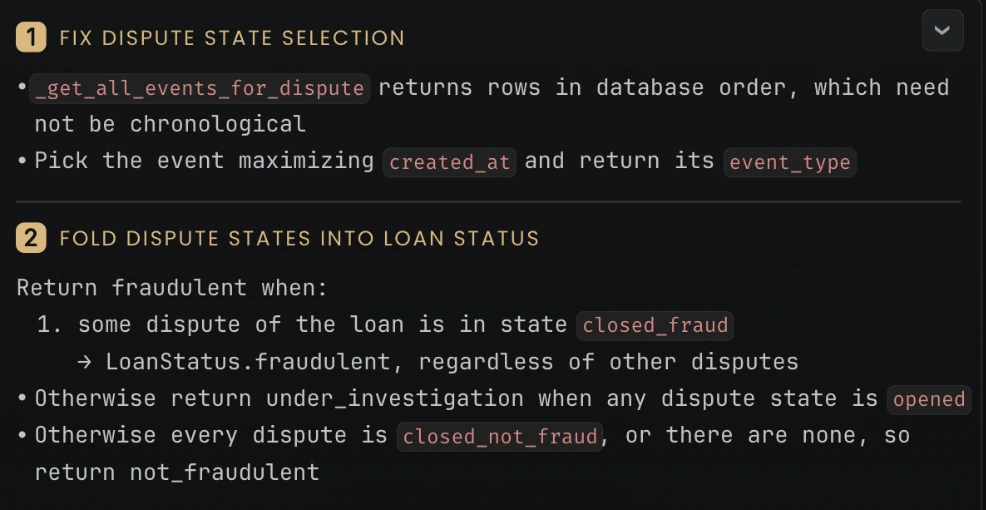
Open another file. Add a constraint. Ask a follow-up. HeapSeek carries forward the code and requirements it has observed, so the next answer starts with the session so far.
Inspect the captured context before solving. Code that hasn’t been shown still needs to be shared.
A new constraint.
A different first step
Balance active sessions
Break ties by server name
Track each session’s owner
Start with a new session
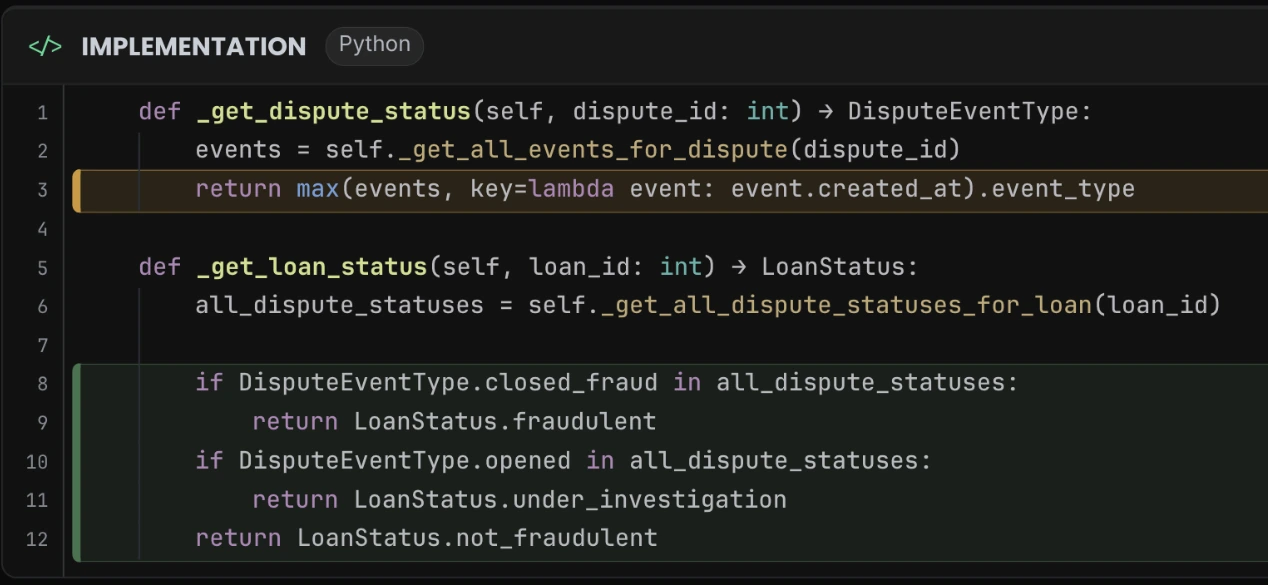
def assign(session): if session in owners: return owners[session] server = least_loaded() owners[session] = server loads[server] += 1 return serverAssign once. Remember the owner
Balance the load, then keep the session assigned to that server.
A workspace for
every kind of round
From a coding interview to an architecture discussion, the output changes with the work. Explore what each workspace gives you.
Coding
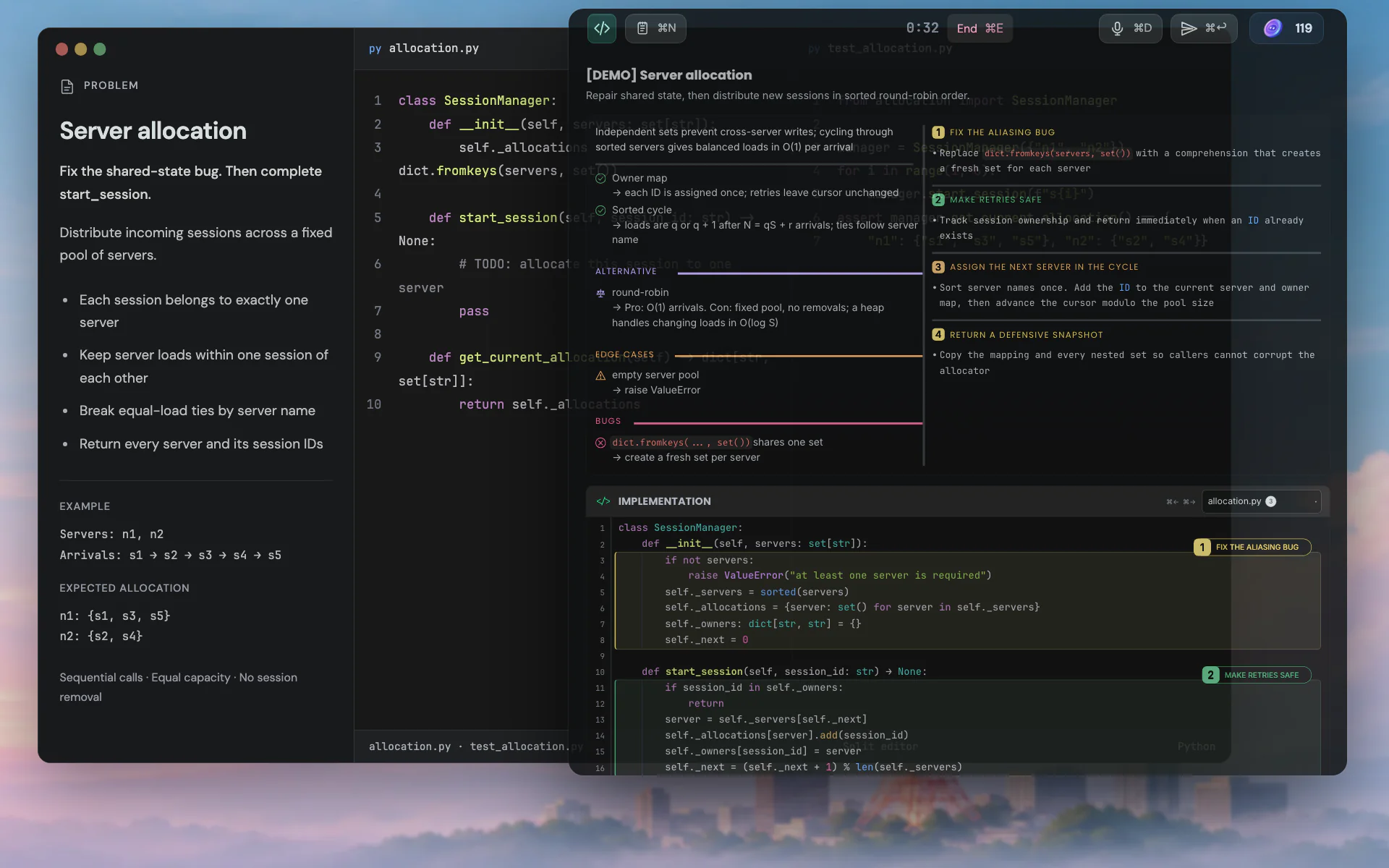
Work through a coding interview with the approach, implementation, complexity and test cases in separate sections.
Watch demo : CodingSystem design
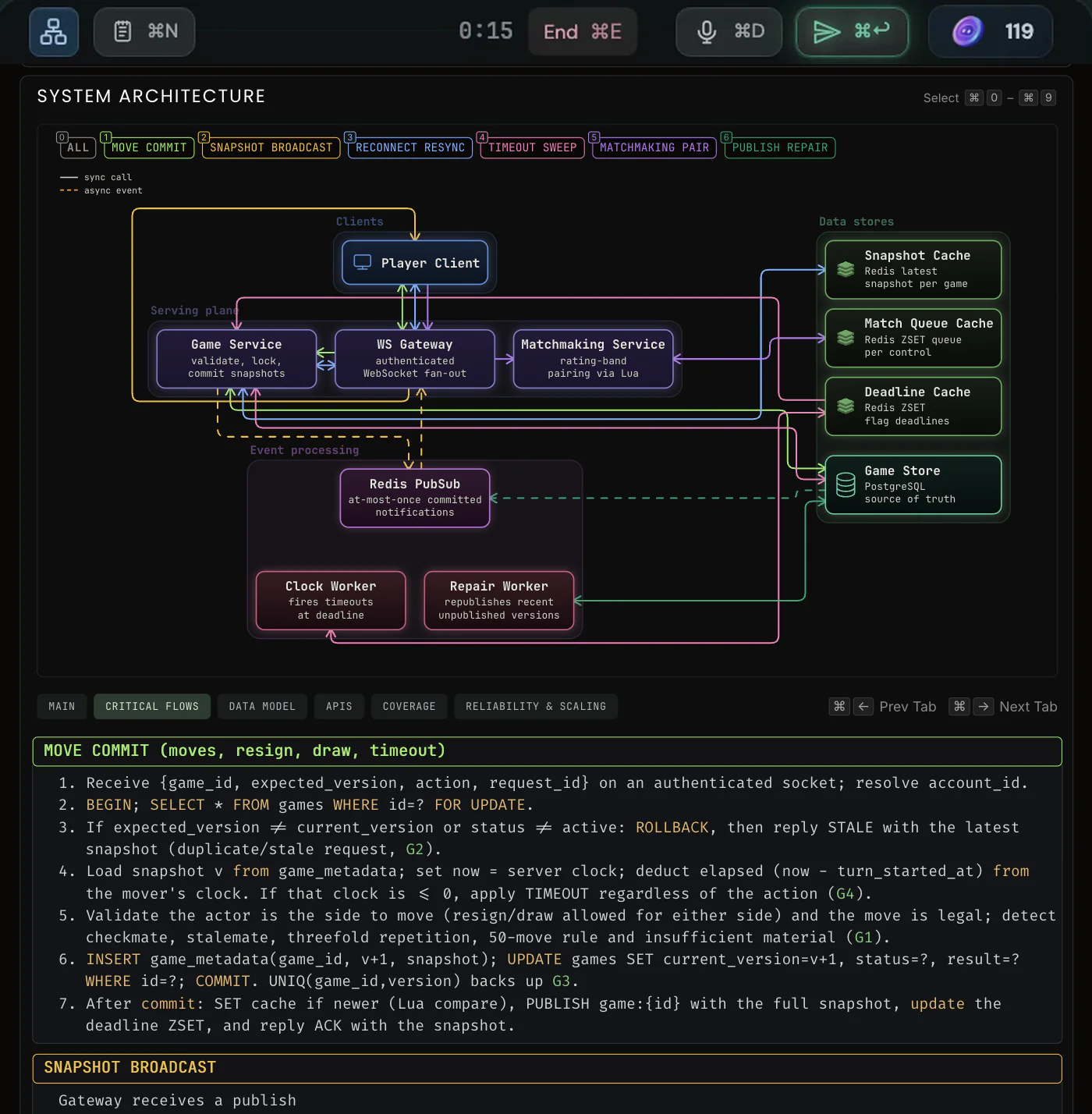
Explore architecture, tradeoffs, APIs and data models together. Follow the critical flows through the diagram.
Watch demo : System designAI-assisted coding Pro
Turn a task into prompts for your in-editor AI assistant, then review the observed output against the requirements.
Watch demo : AI-assisted codingCode review Pro
Inspect a pull request across files. Read prioritized findings pinned to the relevant lines, with a reason for each concern.
Watch demo : Code reviewDebugging
Trace a failing test across the code you’ve shown. Follow the explanation and inspect proposed fixes file by file.
Watch demo : DebuggingFrom the approach
to the implementation
Separate steps keep the approach readable. Implementation, complexity and tests stay within reach as you work through the answer.
See the whole
system connect
Move between the system diagram, critical flows, APIs and data models. Follow the path a request takes through the design.
From the task
to a useful AI prompt
Code Craft · ProTurn the task into an editor-ready prompt. Then check the observed work against your requirements.
Watch Code CraftTask
Add safe retries
Editor prompt
Reuse the owner
Keep load balancing
Test duplicate requestsReview
Same server
Unchanged load
A review tied
to the relevant code
Code Review · ProThe separate Code Review workspace prioritizes findings and pins each concern to the code. Read the reason, inspect the proposed fix and follow the affected lines.
Watch Code Review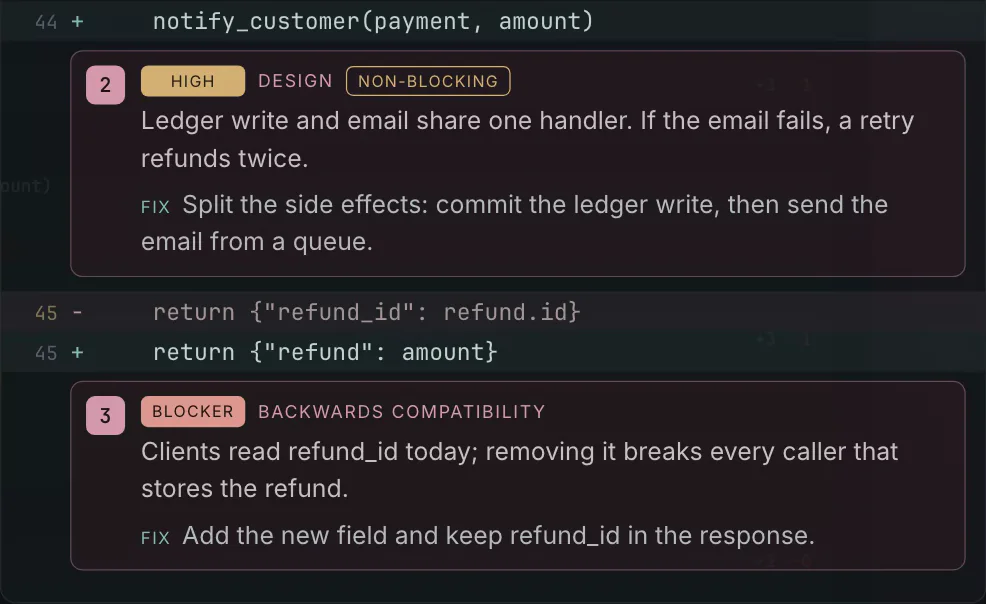
Clear solutions.
Written your way
HeapSeek follows the language of your code and explains each solution step by step. Tailor the approach, naming and comments to the way you code—and the way you want to explain it.
- Python
- JavaScript
- TypeScript
- Java
- C++
- C#
- Go
- Rust
- Ruby
- Kotlin
- Scala
See what stands
behind it
Published shortcut test
On September 24, 2026, all 23 shortcuts activated with zero corresponding browser main-key events. One recorded press per shortcut, in a test harness with Chrome in the foreground.
Command and Shift activity remained visible. This measures browser event delivery, not what a website logs.
Read the test and its limitsBuilt by current and ex-FAANG senior engineers
Our team includes UC Berkeley EECS graduates and senior engineers with experience at Google, Microsoft, LinkedIn, Amazon and Uber.
Why we built HeapSeekBring your next problem
Start with a company interview question.
See where the session takes you